The lights are on, the occupancy counter says 1,100 people by 8 a.m., and your building smells like a campfire that lost a fight with wet drywall. If the HVAC moved smoke, moisture, or demolition dust through miles of sheet metal overnight, you do not have the luxury of a leisurely maintenance call. You have a clock, an audience, and a system that quietly connects every room. Rapid response commercial duct cleaning is not about shiny before-and-after photos. It is about air that supports business continuity, clinical operations, and food safety, all while auditors, insurers, and facilities teams keep score.
I have walked into spaces at 2 a.m. Where the only plan was to make one. If you run facilities for a hospital wing, a call center, a school campus, or a data hall that cannot inhale drywall dust without consequences, you need a playbook that starts before anything goes wrong and ends long after the last HEPA cartridge is sealed in a drum.
Why ducts turn a normal incident into a building-wide problem
HVAC systems are great at one thing above all else, moving contaminants farther and faster than gravity ever could. During a fire in a storage room, smoke particles below 2.5 microns slip past dampers and ride the air like sand in a river. During a sprinkler activation, water vapor and spores hitch a ride across zones. Construction crews cutting concrete in one wing can feed silica dust to return grilles on the other side of the atrium. A single unsealed filter rack on a 60,000 cfm air handler can inhale the kind of grit that chews up coils, fouls VAV boxes, and turns a Monday morning into a public relations problem.
Think through the airflow path. Contaminants tend to lodge in elbows, turning vanes, and on the rough edges of internally lined duct. Cooling coils, with their wet fins and drain pans, love to collect whatever floats by. Fire smoke adsorbs into lining and takes its sweet time to let go. If you only wipe grilles and vacuum a few straight sections, you have done the ductwork equivalent of rinsing a coffee mug and calling the pot clean.
What rapid response looks like at 2 a.m.
A property manager once called me from a downtown hotel at 1:47 a.m. A kitchen flare-up had produced light smoke, the alarm tripped the air handlers off, and the night manager did the right thing, kept them off. By the time I arrived, there were 22 floors of stale air, guests demanding refunds, and a maintenance team with flashlights. We ran a short triage: sniff tests at representative grilles, a borescope look inside a return trunk, and wipe samples on coil faces. The smoke had migrated but not baked in. Within an hour, we had three negative air machines with HEPA filtration at strategic return taps, temporary MERV 13 filter pads at floor intakes, and a cleaning crew split between grilles and the main AHU coils. By sunrise, carbon filtration was catching the last of the odor compounds, and the hotel kept 90 percent of its bookings.
That is the heart of rapid response. Locate the worst of it fast, stop migration, and start removing mass while you confirm the plan with numbers.
The triggers that justify an emergency mobilization
Not every dust bunny deserves a callout fee. Emergency commercial duct cleaning belongs to a short list Click for source of situations where contaminant spread or health risk outpaces routine maintenance. The trigger is less about optics and more about velocity and exposure.
- Smoke and soot migration from fires, even minor ones, with persistent odors or visible residue near returns Water intrusion inside or near duct paths, including sprinkler discharges and roof leaks wicking into internally lined sections Uncontrolled construction dust, especially silica, entering return air during after-hours work Biological contamination such as rodent droppings in ceiling spaces or documented mold growth on liners and insulation Special environments where any particulate load is unacceptable, such as healthcare procedure areas, clean rooms, data centers, or food production zones
Timeframes, triage, and the art of not cleaning the wrong thing first
Speed matters, but sequence wins the day. Cleaning a branch while the upstream plenum still sheds debris is like mopping with the faucet open. The first hour is for confirmation and controls. I want three data points right away: particulate concentration at supply diffusers, odor intensity in return paths, and moisture readings near coils and insulation. Portable particle counters can show PM2.5 and PM10 spikes within minutes. VOC readings, while noisy, help track smoke-related compounds. Moisture meters tell you whether that liner is a candidate for cleaning or a candidate for disposal.
With those in hand, pick a containment strategy. Negative pressure is your friend. It keeps residue moving toward the filter you control, not the office you do not. For large systems, that can mean one 5,000 cfm negative air machine tapped into a return trunk on each floor, or a pair staged at the main return riser. For critical spaces, add temporary door seals and zipper walls. If the AHU can run safely, run it through temporary filtration upgrades while you work. If not, supplement with portable HEPA scrubbers to keep occupied spaces livable.
Technical playbook, from grilles to plenums
Commercial duct cleaning at speed is not a single task. It is a sequence of interventions that must fit the contaminant and the duct type.
Start at the air handlers. If coils are fouled, their wet surfaces become the engine of musty odors and pressure drop. Foam a non-acid, surfactant-based coil cleaner, rinse thoroughly, and vacuum the drain pans. Check the trap. A dry trap invites sewer gas and unfiltered bypass air. Replace prefilters immediately. If smoke is in play, add activated carbon or potassium permanganate media as a temporary stage to strip odor molecules. For systems that can accept them, bump filtration from MERV 8 to 13 or higher for a week, then reassess fan static.
Move to the duct trunks. Access doors matter. If you do not have them, you are cutting and sealing as you go, which costs time later but saves downtime now. Use contact vacuuming and agitation tools sized to the duct. Robotics work well in long horizontal runs with limited access, but they need setup time and trained operators. For internally lined duct with water damage, removal beats cleaning nine times out of ten. Fibrous liners trap spores and char. If the liner is older than the interns on your floor, replace it with closed-cell insulation or exterior wrap where feasible.
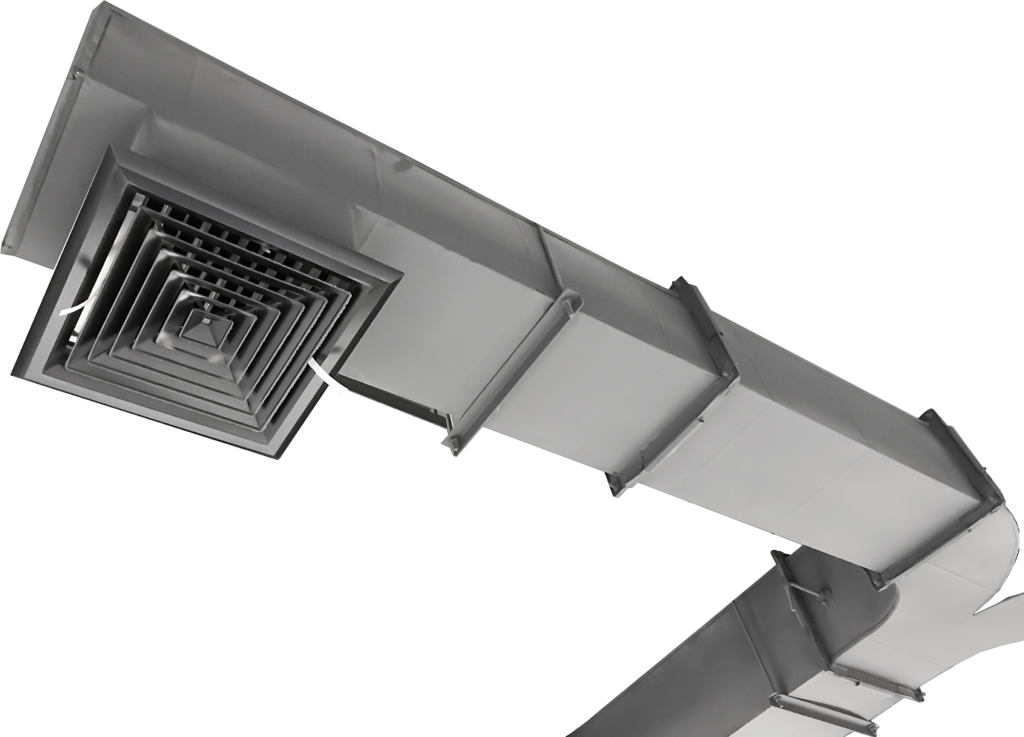
Branch lines and terminals are where comfort meets contamination. VAV boxes collect dust on reheat coils and blades. If smoke passed through, heat has baked residue on the metal, and that residue will perfume your conference rooms every time the reheat valve opens. Isolate electrical components, vacuum with HEPA, wipe with a mild alkaline cleaner, and replace gaskets that crumble on touch. Calibrations drift after a deep clean, so plan a balancing check. Expect to bring a TAB technician back within 24 to 48 hours, once the system stabilizes with clean filters.
Ceiling returns, the part everyone sees, come last in the sequence but matter first to occupants. Clean returns, repaint if aesthetically needed, and wipe the ceiling grid around them. People smell with their eyes. If the grilles are spotless, occupants assume the air is too, which helps you buy patience for the less visible work.
Safety and standards, the quiet backbone of speed
Fast work gets risky if the crew forgets where the rotating parts live. Lockout and tagout is not optional when your head is inside an AHU. Confined space rules apply to large plenums and long duct sections. Fall protection belongs on every ladder and scissor lift, even at 3 a.m. When nobody is watching.
Follow NADCA ACR for cleaning methods and verification. Use ASHRAE 62.1 for acceptable ventilation rates in commercial buildings, and ASHRAE 170 for healthcare spaces. Fire-related work should nod to NFPA 90A, especially when you are resealing access doors and verifying smoke damper operation. I do not bring binders to a midnight call, but I do bring habits, and the right forms to prove we maintained them. Insurers expect chain-of-custody on samples, photographs with time stamps, and disposal manifests for contaminated waste. If you do microbial remediation, many jurisdictions require a licensed remediator and third-party clearance. Build this into your plan, not as an afterthought.
Measuring success without hiding behind scented filters
Do not let “smells better” be your only metric. It is a start, not a standard. You want data before, during, and after.
- Particle counts: target a return to baseline levels for your building type, often under 15 micrograms per cubic meter for PM2.5 in office zones, with lower targets in healthcare. Visual verification: white-glove tests are old school but still effective at the diffuser and coil level. Odor logs: subjective, yes, but if 20 nurses report “burnt toast” in the east wing, you learn faster than waiting for VOC sensors to stabilize. Moisture readings: below 16 percent for porous materials to prevent mold growth, ideally lower in liners you kept. Airflow and pressure: recheck static pressure after filter upgrades, and rebalance zones disturbed by cleaning or component replacement.
People, trucks, and the weird logistics of 4-hour mobilizations
It is not the vacuum that makes an emergency response work, it is the phone tree. Your vendor list should name an on-call supervisor who answers after midnight, an equipment depot within an hour of your site, and at least two technicians who have badged access to your building. Have ceiling plans and mechanical schedules in a shared folder that your team and the vendor can open from a parking lot.
Elevators, loading docks, and security desks become pacing items. If the only freight elevator resets to lobby every 45 seconds, your negative air machine is getting its steps in while your timeline slips. Reserve dock space if you can, and warn security that people with tool belts and suspiciously large hoses are expected guests. If your building has union labor requirements, make sure the contractor knows before they show up with a crew that cannot legally touch a ladder without a steward present.
Costs, because budgets are also air you breathe
Emergency work costs more than planned work, but you still have levers to pull. Expect a rapid response mobilization fee that covers overtime, truck roll, and equipment staging. A typical mid-rise office with two main AHUs and five floors of duct may see a range from the low five figures to the high five figures, depending on contamination severity and access. Healthcare, food production, and clean manufacturing spaces climb quickly due to isolation procedures, third-party testing, and limited work windows.
The largest cost swings come from liner removal versus cleaning, and from component repairs discovered along the way. A single VFD that trips on high static after you loaded up the filter bank can add thousands. So can access door installation in duct that nobody has touched since the last tenant in the 1990s. Good news, these are often capitalizable improvements, and insurers may cover portions tied to a documented event. Get written scopes and photo logs in place early, and align on what the insurer considers “like kind and quality” before you gold plate anything.
Common traps that make a long night longer
One, running the AHU too soon. If smoke or dust is still shedding inside the plenum, the fan turns your cleanup into a snow globe. Two, cleaning without containment. Every vacuum exhaust without HEPA is a public announcement that you are about to redecorate the lobby. Three, ignoring odor adsorption. Char-laced insulation smells like a campfire for weeks, no matter how sternly you speak to it. Replace, do not negotiate. Four, letting schedules outrun signage. If floor 8 is under negative pressure and a door gets propped open for a coffee run, you lose precious control. Five, skipping validation because dawn is here. You will be back by lunch, with more scrutiny and less goodwill.
A short pre-plan that pays for itself the first time you need it
- Identify high-risk zones and their AHU associations, document damper locations and coil access points Stage a vendor agreement with 24/7 contacts, rates, and a 2-hour mobilization clause for priority sites Stockpile consumables, at least two filter sets per AHU above normal rotation, plus temporary carbon stages Map loading docks, elevator dimensions, and after-hours access procedures, then share the map with your vendor Create a one-page response sheet with first checks, contacts, and a decision tree for run or shut down
When to pull the trigger without a meeting
- Visible soot inside any return, even in a single zone, following a fire alarm Moisture detected in duct insulation or plenum walls after a roof leak or sprinkler event Particle counts 3 to 5 times baseline at supply diffusers post renovation activity Strong, persistent odors that reappear with system cycling in the hours after an incident Occupant symptoms concentrated near particular returns or zones, such as coughing, eye irritation, or headaches that appeared only after the event
Two quick vignettes, one success, one lesson
A food processing plant called after a small heater fire. The facility team shut down the main AHU immediately, sealed floor drains, and kept doors closed. Our crew arrived to a system that had contained the smoke to the oven room and adjacent return. Because smoke had not migrated, we focused on that loop. We replaced prefilters, installed carbon blocks for 48 hours, deep cleaned the coil and plenum, and removed a singed section of liner the size of a ping pong table. By lunch, the QA team cleared the line. The cleaning invoice was a fraction of a full-plant response because the first five minutes were textbook.
Contrast that with a school that left the AHUs running during weekend drywall sanding. By Monday, the return duct, VAV boxes, and even the auditorium curtains had a fine coat of gypsum. We spent more on access door installation than on the cleaning itself, and the school lost a week to a problem that started with one missing sheet of plastic and one well-meaning custodian who thought fresh air would help. It did not. It helped the dust see every classroom in record time.
Tailoring the response to special environments
Hospitals, of course, are a world of their own. ASHRAE 170 spaces require specific pressure relationships, and cleaning inside those zones means collaboration with infection control. Expect to build an anteroom, run portable HEPA units to maintain negative pressure at 0.01 to 0.03 inches water column, and log pressures every hour. You clean on the facility’s schedule, not yours. Exhaust systems for isolation rooms and soiled utility areas deserve special scrutiny. Their ducts often carry what you do not want sitting in a horizontal run.
Data centers do not forgive mistakes either. Even if their cooling systems are largely closed loop, return plenums can accumulate particulate that later becomes conductive dust. When a generator test coincides with a rooftop construction project, soot and silica find a way. Rapid response here focuses on filtration upgrades, cleaning CRAC coil faces, and keeping any negative pressure devices isolated from sensitive areas. You bring antistatic equipment and you speak calmly to people who have every right to be nervous.
Food production lines care less about odor and more about what a swab finds. ATP meters and microbial sampling guide the go or no-go call. Duct cleaning often extends to overhead structures, not just ducts, because fallout is fallout. Documentation rules the day, and a third-party hygienist becomes your co-pilot.
Documentation that survives audits and Monday-morning questions
Start the log as soon as you take the call. Time of incident, time system shut down, initial observations, meter readings, photographs with identifiable locations. If you collect debris or bulk samples, bag, label, and chain of custody. For microbial work, use independent labs and keep your fingerprints off the analysis. If you alter the filtration temporarily, note start and end times, pressure drops, and any impacts to airflow. At the end, compile a short report with a timeline, what you cleaned and how, what you replaced, the verification data, and recommendations for follow-up. Nine pages beats ninety when a risk manager just wants the facts.
Preventing the next emergency while nobody is looking
After a rapid response, use the forced attention to make two or three upgrades that change your next play. Install access doors where you had to cut. Replace deteriorated liner with materials that tolerate cleaning without crumbling. Upgrade filter racks with proper gasketing so bypass air is not a permanent resident. Review your preventive maintenance cadence for coil cleaning and drain pan treatment. Consider permanent MERV 13 filtration if your fans can handle the static, or at least during high-risk seasons like wildfire smoke. Train your teams and contractors on dust control during renovations, and give them the plastic and tape to make the right choice the easy one.
Most of all, write down the lessons while they are fresh. What slowed you down, who saved the day, where you guessed and where you measured. Emergencies are expensive teachers. The invoice is already on your desk. Take the free part, the learning, and make it pay forward.
A few final miles of duct between you and normal
Rapid response commercial duct cleaning lives at the intersection of hygiene, mechanics, and choreography. You do not need perfection at 3 a.m., you need containment, competence, and credible data. You need a crew that respects both a lockout tag and a hotel guest, who can agitate a forty-inch round and speak fluent insurance adjuster. With a decent pre-plan and a vendor who answers the phone when the building starts breathing wrong, you will turn a bad night into a manageable morning. The air will clear. The numbers will settle. And your occupants will do what you want them to do, forget the ducts exist. That is when you know you did it right.
Advanced Environmental Services Inc.
341 Stanley St, Winnipeg, MB R3A 1S7
+12042846390